OBI-WAN: That boy is our last hope.
YODA: No. There is another.
See, what this tells me is - in Episode III, Mrs. Vader should have given birth to Luke, Luke should have been passed on to Ben, and Ben should have been ushered off to the desert - therefore, Mrs. Vader's final fate (and Leia's birth) would remain a mystery to the unfortunate viewers who may someday watch Star Wars sequentially, from the Phantom Menace through to Return of the Jedi.
"And that is why your sister remains safely anonymous."
Saturday, September 23, 2006

Monday, September 18, 2006
I have driven way lots.

create your own personalized map of the USA
or check out ourCalifornia travel guide
I did this two years ago (it's right here), and this is an update of all of the states I've visited, not counting those flown through. I'm doing way better these days!
You can your own map by visiting their site.
I caught one.
I went fishing once with James and his uncle, standing in the stream of some little river, leading into a lake with a name I don't know that I ever knew. James and his uncle picked out a prime spot to fish, where they stood on the bank and cast and recast. I stood twenty, thirty feet away, happily casting, recasting, not catching anything. I didn't WANT to catch anything. The fish we were fishing for - blue gill? - were white with stripey flecks of orange and blue. They were slimey, wet, scaley . . . they breathed and undulated, flopped in the air where they didn't belong.
There was ONE I caught, that fell off my hook, that I flipped and flicked and tried not to touch as I released it back into the water - we were catching and releasing, I was glad but didn't know why - and I wanted to flick it back with my foot, but it was so small, no longer than my own hand, thin like a quarter, I was afraid my shoe would destroy it. I managed to get back in the water and swam away, despite a nasty hole in its face from my hook. I hadn't wanted to catch a thing, but was glad I did. I'd caught one, so I could say that much. I didn't have to answer "nothing" regarding how I did, what I caught. I CAUGHT one. I caught ONE.
There was ONE I caught, that fell off my hook, that I flipped and flicked and tried not to touch as I released it back into the water - we were catching and releasing, I was glad but didn't know why - and I wanted to flick it back with my foot, but it was so small, no longer than my own hand, thin like a quarter, I was afraid my shoe would destroy it. I managed to get back in the water and swam away, despite a nasty hole in its face from my hook. I hadn't wanted to catch a thing, but was glad I did. I'd caught one, so I could say that much. I didn't have to answer "nothing" regarding how I did, what I caught. I CAUGHT one. I caught ONE.
Wednesday, September 06, 2006
It's Wednesday, that means Graphic Novel News!
The "It's Only 5:30 For Me" Edition
ITEM! Manga round-up - and NARUTO is where it's at! Volume 11 was released this month and in its first full week on the shelves it has sold more copies in a seven day period than any other graphic novel this year. In fact, if we look at the Bookscan numbers for the week ending August 27th, we can see how NARUTO continues to dominate:
1. Naruto vol. 11 (Viz Media)
2. The 9/11 Report: A Graphic Adaptaion (Hill and Wang)
3. Fruits Basket vol. 14 (Tokyopop)
4. Death Note vol. 7 (Viz Media)
5. Naruto vol. 10 (Viz Media)
6. Naruto vol. 1 (Viz Media)
7. Black Cat vol. 4 (Viz Media)
8. HALO (Marvel Comics)
9. Fullmetal Alchemist vol. 9 (Viz Media)
10. Naruto vol. 2 (Viz Media)
So, only two non-manga titles - and one is a video game tie-in and the other is an historical singularity. Also, Viz takes up 3 of the top 10 slots - but it's worth pointing out that DEATH NOTE, BLACK CAT, and FRUITS BASKET don't have a heavy animated presence in the US at all - FRUITS BASKET is available on DVD, while the other two can't be found on US airwaves at all. What they DO have in common is that DEATH NOTE and BLACK CAT were both serialized in the US magazine SHONEN JUMP before being published in trades. So, there's still something to be said for serialization before being collected and sold in the bookstores - just not in the traditional comic book store format the US is used to. HALO, the only Marvel Comics entry anywhere near the top 10, wasn't serialized at all before its release.
Tell me more:
http://icv2.com/articles/home/9255.html
http://www.lovemanga.co.uk/
http://en.wikipedia.org/wiki/Black_Cat_%28manga%29
http://en.wikipedia.org/wiki/Death_note
ITEM! Along with the redesign of its website, TokyoPop is selling some of its newer and lower selling titles exclusively through its website - angering a few vocal retailers. TokyoPop defends it has an attempt to give special attention to titles that are, quite simply, getting lost on the ever-expanding manga shelves. Retailers (the independent bookstore types, not the chains) are calling it a betrayal of some of TokyoPop's most ardent supporters - some even saying they'll be hesitant to order new TokyoPop series, for fear that TP will simply yank them from the shelves at a later date.
TP has defended their position, saying that they've always been open to experimenting and finding new ways to reach their audience. Some retailers, talking to Publisher's Weekly, said that they never like it when publisher sell directly to their audience, and that the retailers will "remember it at order time." It strikes THIS reporter as a case of TokyoPop preferring to take the merchandising of certain books into its own hands - and the retailers feel a little stung.
Meanwhile, the new TokyoPop site itself looks pretty sharp. I checked out the blogs today and the first thing I saw was a fan gushing about VAMPIRE HUNTER D, a non TP title. Maybe not good for TP's sales, but they're definitely building a community of manga lovers.
Tell me more:
http://www.publishersweekly.com/article/CA6368715.html?nid=2789
http://tokyopop.com/blogs.php
Thursday, March 30, 2006
It might be a crackhead.
Dear lord . . . leprechauns in Alabama. There are so many bizarre things about this video, I don't know where to start.
Thursday, March 16, 2006
Why, Garfield, Why?!
I have a cold and my throat is sore and when I laugh really hard it sounds high pitched like the Joker. Also, it turns out that when you take out Garfield's thought balloons it becomes a strip about a lonely dude who talks to himself:

Sometimes he yells at them.

More!

Sometimes he yells at them.

More!
Monday, March 13, 2006
Mostly About Valentine Victorious
So! I saw this play the other night and it was really good.
It's called Valentine Victorious, written by Nathan Allen and directed by Dennis Watkins, and it was put on by the House Theatre of Chicago. It's the third part of the Valentine Trilogy, a series of plays telling one story over three genres. This last part was a superhero tale set in 1930's Chicago--one of my favorite tricks of the play being the lights and shadows cast against the back wall to give the illusion of a cityscape, the underside of the el tracks, or the headstones of Graceland Cemetery, as appropriate.
I really liked the first play, San Valentino and teh Melancholy Kid, and not a small part of that like was because it dealt with cowboys. I really disliked Curse of the Crying Heart, being part two and concerning samurais, mostly because I didn't think it lived up to the promise of chapter one, or of the promise of the House. I was disappointed overall with the House's second season (of which Crying Heart was a part--we're nearly through season three now, for those keeping score). The House's first full year of shows--dealing with Harry Houdini, cowboys, space ships, romance, 3-D, rock bands, death-defying escapes, violinists, and love, love, love--was presented with a fistful of hope for the future. I know a few theater types here and there, and I'm the only one I know who really likes the House--but that's mostly because they get a little snobby about theater. When we talk about why I like the House, they shake their heads, look at the ground, and say things like, "You now, there's a tradition . . . and if you're going to do theater . . . man, there's just this tradition, and you have to know you're walking in the footsteps of that tradition."
Their meaning being that the House somehow isn't, I suppose. But I think the House acknowledges that tradition in the best way you can, but taking the bits you like, changing the bits you don't, and taking a whole lot of other bits from other stuff. The House uses vaudeville, movies, comics, pop culture, everything they can get their eyes, ears, lips, noses and hands on. And I like that, even when their shows aren't perfect.
But with season two--and with Crying Heart--I felt that they were mostly treading water. I should exclude Cave With Man from that statement, which opened their second season, because that's one of the best plays I've seen them do. Cave was a play that operated almost wholly within its own invented language, which was fun and interesting to get your head around. And (at least the performance I saw) opened with the audience taking part in a drumming, beating, clapping ritual that made you feel like you were seeing some THEATER, man. It was a fun show. But Crying Heart, and Dave DaVinci Saves the Universe after it, didn't do anything new for me. When the House was clever in these two plays, it felt like they were doing it for clever's sake, as opposed to the sake of the play and the folks seeing it. I felt the same way after their third season opener, The Great and Terrible Oz.
But! Valentine Victorious puts them back on a track that I appreciate. I don't know if they do it consciously or not, but they seem to have one "gimmick" every play--magic tricks or 3D or wire-fu or something--and the trick this time worked a lot better than some others. Even with the Rocket Man, which I adored, the 3D seemed out of place and tricksy for the sake of it--but in Valentine, the House used oversized comic book panels during one scene that really called for it. It accentuated the scene and accomplished something that would have otherwise been absent. When this trilogy began I was excited about the use of music--the Trick Hearts have accompanied every performance of the Valentine Trilogy since it began, with the lead character (always played by Nathan Allen, except for a brief spell where he broke his hand during Valentine's run) singing and occasionally playing guitar. With San Valentino, I thought the music would match the genre somehow--but it seemed like that idea was abandoned after part one. Valentine offered a nice opportunity to bring that back with some period-inspired songs, but except for one particular sexy number sung by Carolyn Defrin, it was the same old heartache-rock. Maybe it's just a matter of taste, but for the most part I wanted to get back to the play this time around.
The dialogue was spot-on and snappy and the outfits evoked the feeling of comics and pulps without making the actors look unintentionally silly. I don't entirely understand what happened in the climactic scene--it's a battle between Valentine and his arch-foe, the Black Skull--but I think I worked it out on the bus ride to Pick Me Up after the show. But even that hiccup wasn't enough to throw the piece as a whole off-track. The show was a fitting end to the Trilogy and even, I dare say it, shows the House's growing maturity.
(Well, now that I think about it--the Trilogy's love story, mostly between Valentine and a girl who dies in part one, might need a little more closure. Or maybe it was a choice to keep that unspoken, in which case that's fine by me.)
It was a fine show put on by some fine folks, and if I'd known it was going to win my heart back I wouldn't have put it off until closing night. They close out their third season with Joe Meno's new play, written by Joe and based on his upcoming novel, The Boy Detective Fails. I think it starts in May. Also, they have a swell blog up at .
Saturday, November 26, 2005
Part Three: Coach Carters Speaks of Huks
The most important thing that happened in Oklahoma City was that we received, and then carried across 20 states, a box of 60 knives, most of which were sharp and deadly, some of which were illegal. The most interesting thing that happened in Oklahoma City was this:
Coach Carter sits us down at night. We've eaten, we've showered, we've washed the stink and dirt of our past lives from our shoulders. Coach Carter says to Jack, he says, "Lots of people will try to tell you lots of things. When I was on the base--I was still a kid, still a teenager, but I would hang out with my older brothers, who were already signed up--they used to tell us, and I mean the CO's used to tell us, that the Huks were bad guys. Now the Huks were the army, the, uh, the military part of the Philippino Communist Party. And they'd tell us, don't you go wandering out there in the woods, because the Huks will grab you and take you off and you won't be seen no more. And sometimes that was true, but what you find out is there's more to anyone than what your CO will tell you.
"There was this one night when I was out runnin with the older boys and we found ourselves in this one bar where the American servicemen would hang out. And one of them, an airman, he took a liking to one of the Philippino girls. They were at the bar and talkin close and whisperin and kissin a little, and one of the boys who worked there--one of the Philippino boys--he started getting real mad, because he liked to figure that this was his girl. And she told him flat out, told him, 'No I'm not,' and that was good enough for her and good enough for the airman, but it wasn't good enough for this boy. He raised a fuss, pointin and yellin at these two, but as he was in a American bar, he didn't do much else. He wandered off and we figured that was that.
"We wound up later at this other bar--that was how we'd do it, and you know how it goes, we go from one bar to the next--and it was more of a, you know, a native bar. It wasn't tense or nothin, but you know, the scales were tipped a bit. And this airman is there and he's still kissin on this girl, and this cook shows up, this boy from the last bar. And this boy shows up again--we were all sitting at the back of this bar, and the boy he comes walking in from the front. He picks up a bottle, just a half-full bottle of beer from someone else's table, and he's walking from the front of the bar to the back, and at every table he passes he's giving that bottle a smack. He takes two steps, and whack-whack, he tries to break the bottle. He takes two steps, and whack-whack, he tries to break the bottle. Now I'm watchin this, but the airman and the girl, they don't see nothin yet. And I figure I'll say something when he gets close enough, but meanwhile I'm just kinda freaked out, because this guy's still comin, takin two steps, and whack-whack, he's still tryin to break this bottle. And then he's just about there to our table, and I'm just thinkin I'll have to say somethin, and the boy just happens to be passin by this table where a Marine is sitting and talking to his girl. And this boy lifts up his bottle to whack it on the table, and this is the one where it's going to break, you can just feel it, and the Marine reaches out without even looking up, just reaches out and takes the bottle right out of this boy's hand, and sits it down on the far side of him, and this boy don't even notice, he's still walking. And the Marine keeps on talkin to his girl, and this boy takes two more steps, and then he's standing right there in front of us, only he's by hisself and he's got no bottle and the lot of us stand up, the airman and my two brothers and me.
"And this airman's man. So we push this boy out of the bar, the four of us and this girl watchin, and we got this boy surrouned in the street. And the airman's just about to pound on him while we're watchin on when we're hit in the eyes by these headlights, and it's these MP's, shown up right out of the blue and about saved this boy's life. They ask if everything's okay, and we say sure, and this boy runs off and we go back to our beers, and I have a feelin that this is going to get ugly before it gets better.
"So we decide to go to this third bar. We split up in different cabs and the guy driving ours is Pham--he's a Huk, he and his twin brother are both Huks, but they're good guys. We'd run into them from time to time and talk and be friendly. So they're driving me and my brother to the next bar and we tell Pham about this boy who's been following us around. And we tell Pham, and we're a little drunk by now, we tell Pham that this guy might be trouble, and without us even asking a thing about it, Pham tells us that he'll take care of it. Well, we don't think much more about it and we get to this new bar--it's darker and drunker than the rest, and things are a little tense from the get go. So we're there, me and my brothers and the airman and the airman's girl, and sure enough, the boy shows up a few minutes later. And he's staring us down and the airman's about had it and he shouts at this boy, 'all right, we're gonna do it now or we're not gonna do it at all,' and the boy says they're gonna do it now. So the two of them head out the door, and then one by one my brothers and me see these other guys walk out the door behind them, these Philippino guys, one after the other, like ten, fifteen guys. So we don't even say a word, we just know we gotta go out there or our airman's gonna get it bad. We figure he's still gonna get it bad, as many of them went after him, but at least we'd get it bad right beside him. So we go out there, the three of us, and we're all pushed up ahead and into this circle of mad as hell Philippinos. They got us surrounded and we're back to back to back to back, and they're yellin at us about takin their women and all this shit, and they're gettin out knives and bricks and all that, and I'm just thinkin, hoo boy, this one is going to be bad. But we walked right into it, so we're going to take it, but we're gonna take some of them out with us.
"And then we hear this hootin and hollerin from behind us, and to the side of us, and from down this side alley comes Pham in his taxi. And he cuts his lights off and he's got about ten guys crammed into this little car of his. And then another taxi comes from the other side, filled with another ten guys, and then from all the other alleys and sidestreets these guys come runnin, I mean there's about thirty or forty goddamn guys that comin runnin out, and they're all Pham's friends, and they're all goddamn Huks! And all these boys who were surroundin us, just scatter. I mean they are gone.
"Except the boy who started this trouble in the first place. The airman's got a hold of his collar, and Pham comes up to us and slaps us all on the back and shakes our hands, and boy we were so glad to see him. And we tell Pham this was the son of a bitch causin us so much grief, and Pham puts him in the back of his taxi cab and him and his friends all drive off. Me and my brothers and our airman figure this was as good a time as any to head on back to the base. And that boy who was followin us around, and causin us all that trouble? After he got drove off by Pham in his taxi cab? We never saw, heard, or smelled of him again.
"We never asked Pham about it. But what it goes to show you is this--sometimes the Huks were all right."
NEXT: Cowboy Hats, Regular Fries, and I Think They Thought We Were Gay.
Tuesday, November 22, 2005
The Banana King

There's a new issue of The Banana King available at finer bookstores everywhere! It features stories by Elizabeth Crane, Anne Elizabeth Moore, and some dude named Matthew Jent. Actually, that last one is me, and my story is really awesome. It's called "Long, Low, and Blue" and I made it up by myself. So track a copy down and include the way-awesome A.B. Drea in your prayers for putting together a kick-ass zine.
Wednesday, November 09, 2005
Drills Momentarily Delayed
House leaders late Wednesday abandoned an attempt to push through a hotly contested plan to open an Alaskan wildlife refuge to oil drilling, fearing it would jeopardize approval of a sweeping budget bill Thursday.
They also dropped from the budget document plans to allow states to authorize oil and gas drilling off the Atlantic and Pacific coasts — regions currently under a drilling moratorium.
The actions were a stunning setback for those who have tried for years to open a coastal strip of the Arctic National Wildlife Refuge, or ANWR, to oil development, and a victory for environmentalists, who have lobbied hard against the drilling provisions.
President Bush has made drilling in the Alaska refuge his top energy priority.
The House Rules Committee formalized the change late Wednesday by issuing the terms of the debate when the House takes up the budget package on Thursday.
The decision to drop the ANWR drilling language came after GOP moderates said they would oppose the budget if it was kept in the bill. The offshore drilling provision was also viewed as too contentious and a threat to the bill, especially in the Senate.
-----
That's surprising! But welcome news on a day that also brought news that in Kansas, science is our foe.
Friday, September 16, 2005
It Could Be Corey
From Mer:
I think the quintessential reason to like Coreys is because they make you
feel better for who you are.
Loser who works at Barnes and Noble under one Daisy Morton? Dude, could be
worse: you could be doing coke off of a tranny in East Harlem with Corey.
Writer's block threatening to derail your nascent (fuck, prenatal) career?
Hey, man, you could be on the floor of the Viper Room, sucking gin martinis
out of the carpet since your credit card just bounced and you can't even
convince Tara Reid to buy you a double in exchange for some nasty, back of
the SUV oral, just like Corey.
Have gonarrhea? Hey, so does Corey! The antibiotics work, he says, no need
to cry.
Hurricane Katrina buttfucked your house, school, career, life? You could be
bent over a casting couch, getting pegged by a D-level producer who thinks
that maybe he can find a place for you in next summer's blockbuster "Wet
Coeds 2: Bikini Beach Patrol." You and Corey.
See? See how this day is so vital to America? Because no matter how
bushwacked our own lives seem, we could be in the stinking morass that is
known as the life of being Corey. Thank you, brave Coreys, for living the
life that we don't even want to read about in US Weekly. Amen.
Corey is Dead.
There is a place I go in my head when I must conjure Corey. As Corey Thunder Dome 2005 approached I went there, dear reader. I went to my special place to bring them forth to celebrate this day that honors them, gives them the respect they long fought for and so deserve. As they are shy, I spoke with tenderness. I called to them in soothing tones. Corey, are you there? Corey, do you hear me? I beckoned them in, gently at first and then with great force. I threatened. I cajoled. I cried out, my voice echoing emptily in the night. I sang a stirring, a cappella rendition of “Dream a Little Dream” ending with a Corey Heart medley, consisting only of “Sunglasses at Night” over and over, a broken fucking record. A golden stud in the wrong lobe. The Coreys, they did not come. The Coreys left me alone in my bed, in my head, wringing my hands and tearing at my clothes. I read through the Thunder Dome archive. I spoke Corey quotes aloud.
Could you take the car out of neutral? We just got passed by a street sweeper.
Silence.
An innocent girl, a harmless drive. What could possibly go wrong?
Silence.
Don’t switch the blade on the guy in shades, oh no.
Silence.
I wept quiet tears. And then out of the darkness, slow and with great bravado came sweet music. A gravelly voice. A drunken slur, underlined with blatant sexual innuendo. “I’m a cop, you’re a crook,” he spat. “Nothin’ worse than a bad cop.” He hissed it, tickling the inside of my ear. Nolte, hair wild. Nolte, in handcuffs. Smoking a cigar. Handling the truth. Issued a restraining order. Accompanied by Eddie Murphy? Nolte in my special place.
Alone no longer, I am free. I am his.
Corey is dead.
But Nolte, so very much alive.

Corey Feldman Is . . .
I can't think of a better way to get started than to visit Googlism.
My love for the Coreys goes back to Corey Feldman. We flirted a little in Stand By Me, but we didn't get down to the heavy petting until the Lost Boys. So I wondered what Corey's been up to since we looked him up last year . . .
corey feldman is pretty sure he knows what you think of him
corey feldman is my man
corey feldman is out of the pictures
corey feldman is a secondary player in this one
corey feldman is still alive
corey feldman is a god
corey feldman is to wed
corey feldman is one of the few celebs who's still kickin' it
corey feldman is as eventful as a hollywood high school reunion
corey feldman is cresting on his angry young man
corey feldman is still the better corey
corey feldman is a very vivid memory
corey feldman is in town
corey feldman is revealed here as one of the ugliest young actors in hollywood
corey feldman is cast
corey feldman is crazy teddy duchamp
corey feldman is excellent as a teenage neighbor observer who sits on his porch and invites his friends over to watch the would
corey feldman is good
corey feldman is in this film
corey feldman is excellent
corey feldman is also in this film
corey feldman is also reported to be helping his friend corey out in his time of need
corey feldman is a true class act
corey feldman is okay by me
corey feldman is meanwhile shaving his head
corey feldman is trek in team knight rider
corey feldman is back
corey feldman is sooooooooooo sickening
corey feldman is actor
corey feldman is available
corey feldman is my arch nemesis
corey feldman is 31
corey feldman is also a writer
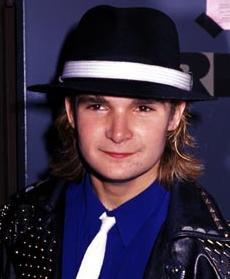
My love for the Coreys goes back to Corey Feldman. We flirted a little in Stand By Me, but we didn't get down to the heavy petting until the Lost Boys. So I wondered what Corey's been up to since we looked him up last year . . .
corey feldman is pretty sure he knows what you think of him
corey feldman is my man
corey feldman is out of the pictures
corey feldman is a secondary player in this one
corey feldman is still alive
corey feldman is a god
corey feldman is to wed
corey feldman is one of the few celebs who's still kickin' it
corey feldman is as eventful as a hollywood high school reunion
corey feldman is cresting on his angry young man
corey feldman is still the better corey
corey feldman is a very vivid memory
corey feldman is in town
corey feldman is revealed here as one of the ugliest young actors in hollywood
corey feldman is cast
corey feldman is crazy teddy duchamp
corey feldman is excellent as a teenage neighbor observer who sits on his porch and invites his friends over to watch the would
corey feldman is good
corey feldman is in this film
corey feldman is excellent
corey feldman is also in this film
corey feldman is also reported to be helping his friend corey out in his time of need
corey feldman is a true class act
corey feldman is okay by me
corey feldman is meanwhile shaving his head
corey feldman is trek in team knight rider
corey feldman is back
corey feldman is sooooooooooo sickening
corey feldman is actor
corey feldman is available
corey feldman is my arch nemesis
corey feldman is 31
corey feldman is also a writer

Coreydome 04
It started here, last August.
For the rest of last year's ponderances on All That Is Corey, check the archives for August 25th, 2004.
The pictures are gone, but there's an awful lot.
For the rest of last year's ponderances on All That Is Corey, check the archives for August 25th, 2004.
The pictures are gone, but there's an awful lot.
Wednesday, September 07, 2005
Monday, September 05, 2005
Chapter Two: Clouds Over Oklahoma
100 miles from Iowa City, and the tidings were grim.
"Hey, I'm a friend of--"
"What?"
"My name's Matt, I'm calling for--"
"I can't hear you."
"I was--can you hear me?"
"Yeah. Who is this?"
"My name's Matt, I'm on my way from--"
"Ohh, yeah. Yeah. Call back when you're closer."
We did, to little improvement. The place of our first rest was filled with silently smoldering angry eyes, inadequate jukeboxes, and one-way streets with no exits. After a short conference we opted for further nighttime driving and unseen campgrounds. Apologies were offered on both sides, and promises made to do better on the other side of the adventure. That particular outcome remains a mystery.
We drove on, across Iowa and past Des Moines (DES moe-EE-nez). We consulted our handy atlas, easily the handiest atlas I've ever known, and we spied a campground not too far from the highway. Our sleepy destination: Winterset, Iowa, birthplace of John Wayne. Time: 4AM. We set up camp in the drizzling rain, in the dark, on a hill, one campsite removed from what looked to be a friendly biker who was pulling an impressive wagon behind him. We were awake again by 8AM, our tent leaking and wet, our sleeping bags a little damp. We drove on.
The rest of the day--a solid 12 hours' drive--took us out of Iowa (not as kind to us as Wisconsin, by far), through a corner of Missouri (where Kansas City was found to be a dreary-looking place, akin to Cincinnati in its grays and browns, though occasionally capable of producing impressively pointy buildings:

), and across the length of Kansas before the rain found us again. Rain, you ask? Rain! Sheets of it, mounds of it, jars full of it, pounding down on us as we raced across the plains. We stopped, twice, and us!, brave exploreres that we were, to let the rain pass us by.
When we at last arrived in Oklahoma City, where we were greeted by our ally Coach Carter, we were tired and eager to shower. Coach Carter welcomed us, offered us food, gave us knives.
Knives?! Ah, dear reader, have faith; all will be explained.
Next: my horsey knife is laughed at.
Saturday, September 03, 2005
Bring Us Your Comfy, Your Well-Fed, Your Hyatt
From Yahoo News coverage on the halted Superdome evactuations:
At one point Friday, the evacuation was interrupted briefly when school buses pulled up so some 700 guests and employees from the Hyatt Hotel could move to the head of the evacuation line — much to the amazement of those who had been crammed in the Superdome since last Sunday.
"How does this work? They (are) clean, they are dry, they get out ahead of us?" exclaimed Howard Blue, 22, who tried to get in their line. The National Guard blocked him as other guardsmen helped the well-dressed guests with their luggage.
The 700 had been trapped in the hotel, near the Superdome, but conditions were considerably cleaner, even without running water, than the unsanitary crush inside the dome. The Hyatt was severely damaged by the storm. Every pane of glass on the riverside wall was blown out.
Mayor Ray Nagin has used the hotel as a base since it sits across the street from city hall, and there were reports the hotel was cleared with priority to make room for police, firefighters and other officials.
Thursday, September 01, 2005
Chapter One: A Good Beginning
The day when I last knew the day was Friday. I hefted my bag over my shoulder, hoping I hadn't brought too little (I had not, by far), or too much (I had, by far--not a comic book was cracked). The journey began seperately, on foot, a walk through Uptown and meeting at the Army Supply Store. It was a fitting place, though by the end such a scene would have made me roll my eyes and make a mental note to blog about it later, how it was all about conflict, or the safe illusion of it. We bought last minute supplies--a new belt, lighter fluid--and my partner of the next two weeks, Halloween Jack, and myself set off for grilled cheese sandwiches and train to the north country.
On the train--the first train--we stood near the doors, holding our bags, ready to hop out. A suburban mom stood beside us as we neared a stop (not ours) and announced, "Which way to the doors open?"
Jack and I looked to each other. I was suspected she wanted us to answer. He was frowny and uncomfortable.
She said it again, "Which way do the doors open?" this time turning to face Jack.
"Well, I don't know," said Jack. "I suspect it's either this way," and he nodded his head behind us, "or that way," and he inclined his head before us.
She sniffed derisively and Jack and I avoided eye contact.
He disembarked from the train deep into the suburbs, which is not the sort of place you want to disembark anything, for any reason. We were to wait here for the Deuce, who would be taking us to meet our third traveling companion. We stepped from the train and looked around for the Deuce's machine, the Forest Moon of Endor, but it was nowhere in sight. We sat down on a grassy knoll and let the world happen around us.
A couple biked past, through the parking lot that flanked the train tracks on either side. They were on a bike, one of those two-seaters, the dude in front and his lady behind him. At first I thought it was typical, the male feeling the need to take charge. Then I thought it was funny, and I pictured the lady with an imposing strap-on, leading her man where she wanted to go. He was a pudgy red-headed lad, hiding his face behind wrap-around sunglasses. She was thin and blonde. She waved at me.
"Hello," I said, though she couldn't hear, and wiggled my fingers.
"She waved," said Jack. "At you."
"It's a good beginning," I said.
The Deuce and the Forest Moon arrived and we drove to Madison, Wisconsin. It was a few hours, but nothing compared to the next two weeks--compared to the ultraday awaiting us down the line. We met Jack's folks, who had brought our #3, the Coyote, down to meet us:

We thought of food, but no . . . the open road was calling. We shook hands with the Deuce, with Mr. and Mrs. Soiree, Jack introduced me to the Coyote, we loaded up our gear, and we were on our way.
* * *
Dodgeville was our first port of call. We saw the signs for Pizza Hut, and we said to one another, yes, Pizza Hut is precisely where we wanted to be. Dodgeville is small Wisconsin town, if a town is even what it is. It's a hilly conglomeration of restaurants and gas stations, the sort of place made precisely to accomodate nighttime travelers. We walked in, we sat down, and Jill, our waitress, approached. She was blonde and smiley and plump.
"Midwestern Stout," Jack told me.
"What's goin on tonight, fellas?" she asked.
What luck! Our first stranger, and already an excust to tell our story!
"Why, we're on our way to the ocean!" I said.
"The ocean?" We were far from the ocean, and Jill knew it.
"We're going to California," I said.
"What for?"
"Adventure!"
Jill was tickled. She was glad to meet us, she said, happy to have been a part of our journey. "I've never met anyone going to California before," she told us.
My gut said we should invite her along, by god . . . but no. The Coyote had not room for a third, and besides, there were would be many friendly strangers on our path, I was certain. Our pizza was delivered, we ate it, and Jill undercharged us. She was reprimanded before we were even out the door.
But out the door we went! Iowa City was our next destination, and in our path would be twisting county highways, pickup trucks with testicles, and phone directions by hosts who did not want our company.
Next: Our Story Takes a Turn
Sunday, August 21, 2005
One more time, from the road!
Made it to SF tonight--exploring fully tomorrow and the next day. A 10 hour trip from Vegas today was draining, but the Penn and Teller show last night was well worth it. Pictures are going up as I can post them at http://moblog.co.uk/blog/matthewjent
Thursday, August 11, 2005
About to Restart for Good
When I return from my Great Pacific Adventure I'll continue the improvements--in the meantime, enjoy the new template. I'll figure out how to put the comments back in when I'm back in town and can beging posting again in earnest--if I'm not back by August 25th, the 2nd Annual Corey Day may be celebrated after-the-fact. In the meantime, wish me luck as I head to the ocean and back.
Saturday, July 30, 2005
File Under: Holy Shit!
Astronomers in the United States have announced the discovery of the 10th planet to orbit our Sun.
The largest object found in our Solar System since Neptune was discovered in 1846, it was first seen in 2003 but has only now been confirmed as a planet.
Designated 2003 UB313, it is about 3,000km across, a world of rock and ice and somewhat larger than Pluto.
Scientists say it is three times as far away as Pluto, in an orbit at an angle to the orbits of the other planets.
EDIT: Based on a conversation from last night--doesn't the new planet screw up all of that hororscope stuff? I honestly don't know.
Tuesday, July 26, 2005
In Search of the American Dream
Or, Manifest Destiny or Something Like It
Or, Rex Phantom and Halloween Jack vs. the American West
It's been done before and I hope it will be done again, by explorers and adventurers braver and of keener eye than we. But we are not the sort of men who build our beliefs on the experiences of others. Therefore on August 11, 2005 we will set out from Chicago, Illinois in a white and black Chevy Cavalier that is yet to be named. We will first travel north to Eau Claire, Wisconsin, to settle what needs to be settled. Then we will drive south to Iowa City to rendezvous with partners and friends. From there to Oklahoma City, where we have a refuge. After this the path becomes nebulous, open to changes based on wind and whim.
Amarillo, because it's in Texas and we will need cowboy hats. Carlsbad Caverns in New Mexico, to see the bats. Roswell, since it's on the way to Albuquerque, where we'll take a left to Flagstaff. From there we'll see the Grand Canyon--because how can we not?--and onward to Las Vegas, where there's another bed waiting and a magic show to see. Between Oklahoma and Las Vegas we will camp, we will build fires, we tell stories for our dinners.
A detour through Death Valley will lead us to San Francisco and the ocean--the ocean! We'll take a few days to explore the city, visit a school, swim in the sea, wrestle the sharks and ourselves.
Next--the journey home! North to Portland, then to Seattle. East over the Cascades, through Spokane and Coeur d'Alene, ripping across the tip of Idaho and following 90 to Montana--onward to Missoula and Butte. Montana! We'll curve south to curse Custer at Little Big Horn, dip into Wyoming and follow our noses to Deadwood, South Dakota, where we'll swear for the ghost of Al Swearengen and clench our teeth for the ghost of Seth Bullock. We'll have mustaches then, by god, or we'll steal them from weaker men!
Northeast, then, to Minneapolis, and a tip of our hats to Prince. Further east to Eau Claire once again, and sweet home Chicago.
Fourteen days and eightteen states and two guys and one car. Countless hearts will be broken, more than one mind will be open to more possibilities than I know now how to count. I'm taking a sleeping bag and a pillowcase full of clothes and a book to read and a book to write and a red baseball bat--not for protection, but to bring a piece of my childhood along for the ride. If you're at any of the stops along the way, or you just want to get to one of them, honk and say hello.
Tuesday, July 12, 2005
Back from the Dead--Ready to Read!

Saturday July 16th, 8pm!
909 W. Agatite apt. 2!
Tell your friends! Invite your mom!
Friday, June 24, 2005
50 in 05: Martians, etc.
Summertime! Summer is when I buy lots of books--Morrison's 7 Soldiers series, Disinfo's Book of Lies, and Chomsky's What Uncle Sam Really Wants, most recently--but the actual reading goes slowly. It's hot and I'm sweaty and I'm daydreaming of going really fast in a car that's really cool.
#17: A Princess of Mars and #18 The Gods of Mars, by Edgar Rice Burroughs. Martians! These are the first books in a series that originally appeared in pulp magazines starting in 1914. Burroughs later created Tarzan, but he kept returning to these stories of John Carter, the Warlord of Mars. Carter is a Civil War veteran hailing from Virginia, and one day while on the run from Indians in Arizona, he is bodily transported to far-away Mars, called Barsoom by its natives, where he discovers he is Awesome at Everything and goes on to conquer everyone he meets and marries a princess. Huzzah!
Actually, they're pretty good. I think they would be more enjoyable when read as intended, or at least as originally published, in cliff-hanging excerpts from issue to issue. It's fun, sci-fi adventure stories for boys, before the trappings of sci-fi choked the genre into complacency. I also appreciate how BANG! the adventure begins right away--there isn't 50 pages of getting John Carter to Mars, or worry about how he got there. He's just there, and the story unfolds. Part of that is due to the format, the getting-to-the-point of it made necessary by serialization, but even that can go wrong--see superhero comics these days, and stories that are "written for the trade."
Odds are, you can find these stories cheap, too. There are something like 12 or 14 books in this series, but I've seen a collection of the first three floating around. And as good as it is, they are adventure stories for boys--after reading two I was more than ready to move on to something else for a while.
Next--Brautigan, Abortions, Steinbecks!
Wednesday, June 08, 2005
Moxie Crimefighter
According to Neil Gaiman congratulations are in order, and I believe him. So: congratulations to Penn and Emily Jillette on the birth of their daughter; but mostly congratulations to their daughter on being named Moxie Crimefighter Jillette.
Tuesday, June 07, 2005
SWEAT
SweatSweatSweat.
The Rogue Reading, being the brainchild of one Eric S., was a lot of fun this past Saturday. Approximately 3% of the promised readers actually showed up and read, but those of us who did are the more and cleverer for it. Rumor has it the Earl of Wessex is still half-full of beer, and a post-party gathering may be required to topple him.
Summertime does strange things to a man's brain. I'm never as reflective at the end of December as I am in the beginning of June.
Thursday, June 02, 2005
50 in 05: Mystic River and Will in the World
The smell of deadlines is in the air, so I haven't been good about blogging lately. I'll try to catch up on a few of the books I've finished lately:
#15: Mystic River by Dennis Lehane: It's the sort of book that you read because of the plot, because of what it's telling, and not how it's told. But the moral seems to be that kids are killing kids because of video games. No kidding:
"Sean looked into the bloody face of Jimmy O'Shea and what he saw there scared the shit out of him. There was nothing there. Probably never had been. The kid wouldn't pull the trigger because he was angry or because he was scared. He'd pull the trigger because Sean was just a six-foot-two video image, and the gun was a joystick."
Ugh. Skip it.
#16: Will in the World: How Shakespeare Became Shakespeare, by Stephen Greenblatt. On the other hand, this is an excellent book--the best I've read in a long time, and one of the best non-fiction books I've picked up period. It's a lot of conjecture and what-ifs, but it goes into the life Will Shakespeare led, what he was doing when he was writing some of his plays--who Falstaff was based on, at least partially, what the deaths of Christopher Marlowe and Will's son Hamnet meant to him and how they can be seen reflected in his work. Will's religion, or lack of it, his brushes with the scheming politics of his day, what set him apart from other writers, both then and now. Anyone who likes Shakespeare (and if anyone *doesn't* like Shakespeare, it's because they haven't seen it done well), or anyone who is a writer, would appreciate this book. I kept putting it down to take notes. It led me right into reading Richard III and writing a play about Los Bros Booth, Edmund, Brutus, and John Wilkes. I can't recommend this one more.
Thursday, May 19, 2005
To All Who Are Literate, and Most Who Are Not

Come, read, enjoy. Most of the above faces will be there.
(invitation crafted by Erin Howk)
Wednesday, May 04, 2005
50 in 05: Oxherding Tale
#14: Oxherding Tale, by Charles Johnson. It's mostly out of print these days, I think. I read it for school. I liked most of it. Sometimes it made me laugh. It strikes me as the sort of thing best enjoyed on a second read though, and I don't think I liked it enough for that.
Have you ever read a book or watched a movie and though, "That was good," and genuinely meant it, but then never thought much about it again? That's how this one felt. Not that it's fluffy, just that it was good, but still didn't particularly tickle my fancy.
Have you ever read a book or watched a movie and though, "That was good," and genuinely meant it, but then never thought much about it again? That's how this one felt. Not that it's fluffy, just that it was good, but still didn't particularly tickle my fancy.
Saturday, April 16, 2005


Wednesday, April 13, 2005
Sequential Heart
If you're interested in comics, I'll be writing about them at Sequential Heart. And if you're interested in writing about comics, let me know--we're looking for folks to contribute to this groupblog and raise the online dialogue about comics--any kind of comics--above the general message board negativity you find in most internet circles.
Wednesday, April 06, 2005
50 in 05: The Bluest Eye
#13: The Bluest Eye, by Toni Morrison. Someone saw me reading THE BLUEST EYE and asked how I liked it.
"I like it okay," I told them.
"I heard Toni Morrison is too wordy," they said.
I don't know what that means, but what I said in response was, "Well, if you've got two-hundred blank pages to fill, you might as well be wordy, I guess."
The woman smiled and said, "Yeah, I guess so," and we went back to not talking.
I like THE BLUEST EYE because it's built with a structure I would never think to write a story with. The novel revolves around Pecola, but it opens and closes and is interspersed with first-person accounts from Claudia; we jump back in time and hear the stories of Cholly and Mrs. Breedlove; we hear a conversation between Pecola and her madness. It's like an experiment (or a dozen experiments) that collate into a complete novel.
Before I read it I was told it was autobiographical fiction tied to a place instead of a life, but to me it was the feeling that came through--autobiographical fiction tied to alienation and fear and potential lost. That said, I didn't read the author's afterword. I don't mind talking about a novel or a play or any piece of art--I like it a lot--and I like it when an artist talks about creation in a general sense, or with regard to their own process. But at the same time, when I order a bowl of soup I don't want the cook to come out before, during, or after to tell me all about what's in the soup. I just want to eat the soup, you know? And if I choose to discuss what I liked, disliked, or was indifferent to about the soup, that's my own business.
I spent a week living with this book and there are still things I can't get out of my head. Cholly's chapter, Soaphead Church . . . yeah. Way to pick 'em, Oprah.
Saturday, April 02, 2005
50 in 05: Marvel 1602
#12: Marvel 1602, by Neil Gaiman, Andy Kubert, and Richard Isanove. This one is pretty short--because this is a fun book. It's flat-out for folks who like Marvel Comics and who know how the Marvel Universe got its start. It's not a love letter to superheroes, and it's not a love letter to comics, it's a love letter to the Marvel Universe--and it works really, really well. It leaves me wanting more, but not in a "sequel" sense--in a "I want to pour my G.I. Joes out on my bed and continue these adventures after supper" sense. It's neat seeing Andy Kubert's art find its way as the story moves along, too. There are still a few story points I don't quite understand, and I'm a little iffy on the hook of the Forerunner, but this was a really fun comic book.
Thursday, March 31, 2005
50 in 05: Miniature Sulk
#11: Miniature Sulk, by Jeffrey Brown. If you're looking for The Next Jeffrey Brown Book, this is not it. SULK is a collection of stories that seem to be about Jeff's childhood and current relationship with his brother(s) and his family, but unrequited crushes quickly turn up, and then it turns into what looks like a collection of his sketchbook material. There are a few comic strip-ish short bits, including two panels featuring "Sensitive Guy" that I thought were really funny--Sensitive Guy stops a girl about to unbuckles his pants because he's written her a poem--but overall, it seems like the Top Shelf folks were just filling up pages on this one. I don't mind collections of miscellany at all, but this one seems extra unorganized, especially towards the end. The funniest bits are those that are most surprising--Jeffrey Brown diving out of the sky to knife his arch-enemy, for example--but I was really hoping this book wouldn't turn into Brown's comic book alter-ego pining after girls who don't love him. "Clumsy" and "Unlikely" are already prime examples of that--I'd much rather see more strips about Jeffrey growing up with his kung-fu brother.
Tuesday, March 29, 2005
Sandman!
Ain't It Cool reports that Thomas Hayden Church, he of SIDEWAYS, will be playing Sandman in the next Spider-Man picture. I always liked Sandman--I hope he wears that green shirt. And I have a soft spot for THC, as well--and it's a lot better than the earlier rumor that Venom was going to be the SM3 villain.
Heidi has a side-by-side comparison at the Beat.
Heidi has a side-by-side comparison at the Beat.
RQL needs blood of the living to survive
Hello All,
Some of you might have heard of Real Quick-Like before--it's a fiction zine I'm helping my pal Annie D put together. We put out the call for short works of fiction written for the theme "Last to See Them Alive" and we have the 8-or-so pieces we want to use for the first issue--now what we need are black and white illustrations to accompany them.
RQL is going to be printed and distributed by us, sold in places around Chicago like Quimby's and Chicago Comics. It will go out to other cities depending on where we know people--so if you're interested in taking a stack to your local book/record/comic shop, let us know. No one is making any money on the project, but it gives us a chance to put out something we're all proud of for other folks to see.
So if you're interested in drawing a one-page black and white illustration for our first issue, and if you have the time to do it in the month and a half or so, please let me know--we want an illustration to accompany each story, and I'd love to get a story in your hands to inspire you as soon as possible. And if you know anyone else who would be interested, send them my way as well.
Your friend in the small press,
Matthew Jent
Friday, March 25, 2005
Gmail
I don't trust it. It kind of creeps me out--from what I understand (and when it comes to the interweb, I understand very little), some sort of microscopic internet spirit who lives in the sky will kindly allow me to see advertisements based on the content of the email I send and receive. Not to worry, however, for said email is entirely, 100% safe, secure, and private.
Er. Right then.
However! Gmail storage is ridiculously large, so when my pal Jodi (let's hear it for Nashville!) sent me a Gmail invitation, I happily accepted. I like it a lot better than hotmail for my junk mail, giving-out-of-my-email-on-websites, and things of that sort. All of this is to say, if anyone else wants a gmail account, let me know--I seem to have 50 invitations I can send out. Drop me a note at matthewjent@gmail.com if you're interested. But if you just want to tell me how much you like me, show me pictures of your boobies, or tell me secrets about your boy/girlfriends, keep using the old one.
50 in 05: SPX 2004
#10: SPX 2004: War!, edited by Greg Bennett, Charles Brownstein, and Chris Pitzer. Usually I'm right on top of the SPX collections--they're published in conjunction with the Small Press Expo every year and they showcase new and indie comics folks. But somehow this one slipped past me, so I finally picked it up as part of Top Shelf's big sale a while back. So that means it's been two years since I picked up an SPX anthology, so one of two things has happened--my tastes are evolving, or the SPX gang put together a very, very sub-par book last year. Or maybe the contributors to this volume fell victim to the idea that writing is easy--of the 27 stories, only three have a writer AND an artist, and it shows. Now, I'm not writer-snob--some folks get by just fine without a collaborator, and some are better than those who only write. art spiegleman, Frank Miller, Carla Speed McNeil--none of them, however, are in this book. I read it in a day and most of the entries were poorly thought out, amateurish morality tales.
The theme for 2004 was "War," so we got things like an Asian couple sneaking across the border into Wisconsin--"Patriot Act Free Since 2006!" and an American pilot surprised at how much he liked a Serbian man, in spite of following orders to drop bombs on the man's country. Nothing new or poetic here.
The stand outs were few--"Building It Up Just To Tear It Down" by Alex Lukas, about the construction and deconstruction of the railroads before and during the Civil War was one. My personal favorite was "The Holy Kingdom," by Bruce Mutard, concerning a Christian soldier rethinking his place in the Crusades in 1191. I got the sense that it was a piece of a larger work, and I hope it finds its way to the reading public someday soon. I'm not sure if SPX 2005 is available yet, but if it's no better than 2004, and this anthology is truly a barometer for the work being done in the alternative comics scene, indie comics might be in for a rough patch for the next few years--until the folks currently being influenced by manga start putting out work.
50 in 05: The Bell Jar
#9: The Bell Jar, by Sylvia Plath. What the shit? How did this one get away from me for so long? Where were you, my trusty readers, a few months back when I was looking for female coming-of-age stories? Well, in case y'all didn't know, Sylvia Plath is really funny. This was on my reading list for a class on Autobiographical Fiction, and being a class full of writer-types, you'd be surprised at how much of the conversation was stuck in "she writes very accurately about depression" mode. One fella even said that the depressed tend to see the world very objectively, since they know they can't change anything. He also has chronic stomach problems.
I'm not a big fan of poetry, you know? I like a few poets--I like listening to Saul Williams rather than reading him, and I like reading Raymond Carver's poems rather than watching a movie about his stories. I haven't read any of Sylvia's poems, but she writes a balls-out novel. It's the lack of likes that really get me--her doctor's desk is an acre, her chair is cavernous, Esther would see a tiny Alp in her eyeball after she visited Europe. It's all true and factual, the metaphors are real and not metaphors at all. I mean, they *are* metaphors, but, you know--there's a big difference between BEING and BEING LIKE, and it's of such a size you often don't see it until it's right there in front of you.
In my own work, that specific word choice signifies a certain confidence in language. I remember being in class when it first happened, when I saw the difference the absence of 'like' could make. I said, "It's making the metaphor real," and my teacher Carey said, "Yeah," and then I said, "Yeah!" and, and holy shit, man! That's magic! It carries greater weight in first-person accounts. It imbeds you deep in the perspective of who is telling the story. It's a reminder that the story is subjective, that it's a perception being reported. I like that reminder.
So, the Bell Jar: really, really good book. And if you've ever read Sylvia's journals, you know she went on a lot of blind dates. Those are really funny, too.
Wednesday, March 16, 2005


Sunday, March 13, 2005
Saturday, March 12, 2005
Dateline: 1995!
While I'm at it, I thought it would be neat to think of the titles, ten years later, that sparked my love for comics all over again. Not that I ever really stopped, but these were the books that sent my brain spinning into completely different directions.


Dateline: 1985!
I ripped this idea off of Dean Haspiel's blog--the idea is to find the first five comics that started you down this dark, seductive path. I found all of the covers from the wonderful comics.org, which seems to have scans of every comic book cover you could possibly want.


Friday, March 11, 2005
holy CRAP, or "Let's Get Nerdy"
I found the trailer for REVENGE OF THE SITH online, and dude:

. . . I had a total nerdgasm.
. . . I had a total nerdgasm.
Thursday, March 10, 2005
50 in 05: A Soldier's Daughter Never Cries
#8: A Soldier's Daughter Never Cries, by Kaylie Jones. Kaylie Jones (I'm gritting my teeth and shaking my fist in the air as I say it)! If I was the kind of man I wish I was, I would challenge her to a duel. No pistols or anything pussy like that--well, maybe knives--but I was thinking a bare-knuckle knock-down fist fight. On the one hand, she writes a novel--and when I say novel I'm thinking "novel," because she might as well have just written a damn fine "creative memoir," and in the process justified her father's mixing of fact and fiction (that's novelist James Jones, he of the Thin Red Line and From Here to Eternity)--and in fact, add that to the list of reasons I want to fight her--but anyway, she wrote a novel that features one of the most honest and American of American families I've ever seen in fiction. Thank god she added a new chapter in "Mother's Day," as it's the only thing that redeems her mother from the last third of the book, and also serves to foreshadow the inherent forgiveness Channe feels for her mother in "Citizenship."
The awkwardness of pre-sex in "The House in the Tree" is a mate for "Human Development," in which we meet Francis, the perfect boy at the perfect time for Channe. And "Diary," though at first it feels like an awkward way to end a novel, explains a few things, biologically speaking, about the emotional capacity of the Billy formerly known as Benoit. And, for the record, I actually like the ending a lot, awkwardness and all.
Now, on the other hand: if Bill Willis, he-man tough guy writer, shed one more single, solitary tear--staring straight ahead, his face otherwise emotionless--I would have grown a beard and moved into the mountains, never to read another word again. My companions would have been the wolves, who have no word for "melodrama" in their language.
I ask you to consider: the same pen that wrote, "I sat at the edge of the his bed in darkness as I had so many nights as a child. I tried to start out calmly but no words would comoe, just tears, hot ones smelling like vodka," also wrote, as Bill Willis discusses a broken Roman amorhpa, "'Those worms are so old the sea turned them into part of the clay.' He said this without emotion, although a tear, which he ignored, dropped out of his eye." I ask myself why Kaylie Jones, who is surely my arch-foe, and who displays such wonderful instincts elsewhere in the novel, makes this choice. Another scene like this, where Bill sheds a solitary tear over the memory of a Japanese soldier he murdered, turns what is a fascinating and real portrayal of a lost father inot a caricature of a tough guy with a tender guy inside.
Another affront: bubbling below the surface of this novel is the idea of a girl and her adopted brother, a girl who readily admits to being flirtatious and sexually curious--yet this taboo of incest is skirted around, ignored as easily as a giant, man-eating bear in the living room. Channe and her brother "had never even kissed," Kaylie tells us. Janet No. One, a schoolmate of Channe's, spreads rumors that Channe and Billy slept together. Channe encounters a surrogate boy Billy's age in a treehouse to experiment with, explore, and eventually despise. Billy might as well be asexual for the lack of development he displays as the novel charts Channe's progress from childhood to her late-20's. But what is most interesting is this--Billy's biological mother, according to her diary, is impregnated by her cousin (by marriage), even though they never had sex. They laid down together and she felt a hot spurt on her thigh. Channe and Billy shared a bed many times but never, as my memory serves, is there a mention of them touching, in any way. It's a decidedly absent detail. The whole matter is this gian LUMP under the carpet, talked around and occasionally glanced at uncomfortably.
If Kaylie Jones was my friend, I would ask her: How? Why? How can you dance what could be a beautiful, uncomfortable, dramatic moment when this subject is broached? And if she couldn't answer, if she didn't answer, that is when Kaylie Jones would become my enemy.
Monday, March 07, 2005
Supergod of Longevity, parts one and two
Dorothy was a waitress at the Promenade, working the night shift in an all-night joint that played jazz and played host to lonely souls, or souls ready to make a change. She had hair that was blonde, black at the roots, and her customers liked it that way. She was tall and she had a smirk her customers liked, too. She made a good living on tips. Nelson sat at her tables a few times a week; he was a man with slicked back hair and a thin mustache, but he made it work. His suit was rumpled and not dark enough to get anyone’s attention
“Gimme a fruit cocktail, I ain’t too hungry,” he said.
Dorothy smiled. “Sounds like a real man to me.”
She shimmied away and Nelson watched her hips (dear god, he loved her hips) and he couldn’t tell if she was joking or not. She came back with a fruit cocktail, placed it in front of him on a violet napkin, and winked.
“You come here a lot,” she said.
“I come here sometimes,” said Nelson. “You work here a lot.” Nelson tried to grin, but he was afraid it looked fake and he let it drop.
“Well. Grin if you need anything,” Dorothy said.
Nelson grinned and couldn’t help it, and Dorothy grinned right back. Nelson watched her while she worked, listening to the band. He smiled from time to time, not a full-fledged grin, but his smile dropped when he heard her three tables over, saying, “Grin you need anything.”
Nelson ordered a shot and left before she brought it.
Two nights later (maybe three), Nelson met Trick. Nelson had entered and sat in a table across the bar, away from Dorothy’s section, and he noticed Trick at Nelson’s own usual table. Trick was dressed in gold. It sounds like a joke, but it’s true—gold shoes, sparkly trousers, a jacket and bow-tie that glittered. He had angel dust on his face that sparkled, even in the half-light of the Promenade, and he winked at Nelson when he caught him staring.
Nelson frowned and puckered his face, at Trick and the liquor he’d ordered. “Give me something nasty,” he’d told the waitress, the one with brown hair and eyes Nelson didn’t bother appraising. “What?” she’d said, looking him square in the rumpled suit, and he’d only waved her away disapprovingly. She brought something brown and thick and when Nelson drank it he swallowed fast to keep from gagging.
Every few minutes he looked up to see Trick, whose name he did not yet know, and from time to time Trick looked back and winked. Whenever Dorothy approached Trick’s table, which was often, Trick had a hand on her hip and looked up at her, smiling and laughing. Dorothy did the same, smiling and laughing, touching Trick on the golden shoulder with her fingertips. Dorothy wore rings, four on her right hand, three on her left, the space for a wedding ring left absent. Nelson checked that every time he went to the Promenade, his eyes tracing the white of her cuticles past her knuckles to the space for a ring. He checked it whenever he could, that space. That’s what he focused on when he see her with Trick, when she delivered Trick’s wine and his shots and returned his glasses. Dorothy walked away from Trick, and Trick winked again at Nelson. He’d never seen this man before, but here he was, bathed in gold, Dorothy’s fingernails painting him with love.
Nelson raised his hand and snapped. The shadow of a waitress fell over him and Nelson didn’t bother looking up.
“Sumthin’ nassier,” Nelson said.
“I don’t know what that means,” the shadow of a waitress said.
Nelson turned to look at her. “Some-thing, nast-ee-ur,” he said, his eyes on the bags under her own.
She might have laughed, but Nelson wasn’t sure. He closed his eyes to keep the room from spinning.
“Nastier than what?” she said.
“That stanky ass cootch you got unner your--”
She slapped him and Nelson fell out of his chair. By the time his eyes opened he was in an alley, vomit on his chest, and he almost hoped it was his own.
* * * * *
I make no apologies baby, and you might as well print that on my gravestone. Not that I’m ever dyin’, because bitch, I’ll be too busy flyin’. My name is Trick, honey, and once I enter the room you won’t remember how drab your life was before I got there.
Now, I was eyeing this boy Nelson, the one with the nappy hair just dyin’ to be set free from whatever potion was keeping it in place, because I could tell he wasn’t quite at the bottom of his barrel. That’s when I like ‘em, right before they hit it. Cuz once they hit it, they gots nowhere to go but up—that’s when they start getting’ their shit together, and they take one look at Trick and know they gots to go the other way. So Trick (and that’s me baby, don’t be confused by the syntax) knows to grab ‘em when they think they hit the rocks, but in fact they still fallin’.
Well, Nelly, he was fallin’, and fast. I was eyein’ him with the intent to move in, and soon, and poor bitch-ass fool got hisself thrown outta the goddamn bar. Now, how the shit you get thrown outta Promenade? Well, in this case, it’s tellin’ Marmalade Maggie she got a smelly ol’ cooter, I guess, but fine. It makes my job different than I expected, but no harder. Like I says, Nelly was fallin’ fast. He was over there eyeballin’ me and thinkin’ I was mackin’ on his favorite waitress (and I was, but only because I don’t know no other way to talk to no ho), when in fact I was getting’ the digs on his own self. Askin’ that girl what was up with this boy, why he lookin’ so horse faced, whether or not she got the butter for his muffin.
“He’s attractive,” she done told me, “but I’m not attracted to him. He’s too sad.”
“Ooh, girl, everyone’s sad once in a while. Maybe you’s the one to perk him up.”
“Maybe you’re the one to perk him up,” she told me, but she done blushed when she did it. “Why are so interested in Nelson, anyway?”
(And that’s how I figured his name, see it? Tricks is Tricky, baby girl.)
“I’m a cupid swathed in gold,” I told her, and I held my arms out like Jesus done did when they hammered ‘em. But I fluttered my eyelids, and if there’d be any Romans in the Promenade, I’da converted ‘em over and over again.
But I digress. Girl, don’t even let me get on like that. I paid up my bill and I even paid down his, and Dorothy, she look at me funny for that one, but I just touched her on the arm and tell her I got a soft spot for alley cats. She laughed and told me I was a softie. I almost told her, “Not since I was ‘leven, baby,” but figgered I’d just put that one in my pocket and save it for later. I gots work to do.
I left out front, then swung around the side, through the alleyway. Contrary to popular belief, now, Mama Trick don’t mind gettin’ his feet muddied up when his baby birds is squawkin’. I stomped through the mud and piss and shits of that alley, knowin’ all the while that as soon as I got back home them pants was goin’ in the furnace. I stood over that unconscious, puke-stained man, and I knew there wasn’t much ol’ Trick could do to wake him up from wheresever he was. Not much, but a thing or two.
So, speakin’ of thangs, I unzipped my drawers and pulled mine out. Uncoiled it, unrolled it, stood on my tippies to keep it from brushin’ the stank as ground. I didn’t aim it at the poor bitch’s face, naw, just to the side, is all. I let him hear the spatter right in his ear, let the spatter go spatter on his face a time or two. A drop on his eyelid, a drop on that rotten-ass ‘stache of his, and shit baby, I don’t even feel bad about that one. That thing needed to go anyway. His eyeballs flittered and fluttered and his lips quivered and quavered and he blinked open just in time to see god, that is, my thang, being roped back up and put into stable. There was a twinkle in his eye, just a flutter of seein’ somethin’ greater than he be, before his throat done gurgled and his stomach done rebelled and he done puked all over hisself one more time. First time that happened to ol’ Trick, I can tell you that, some brother sickin’ on hisself at the sight of my glory, but that’s no harm. I don’t take it personal.
“Wake up, Mary,” I said. “I’m ‘bout to make you a happy man.”
Nelly said somethin’ there, but I know none what it was. I can talk drunk-speak all right, but his was drunk-speak on toppa self-pity, and pity ain’t no thing Trick knows much about. I pulled him up by his pride and put him in a cab, then sent it on to my crib. I got my own cab and followed, cuz there ain’t no way I was ridin’ in the same machine as that stanky ol’ bitch. Not Trick baby, no sir.
Monday, February 28, 2005

Thursday, February 24, 2005
I wrote this myself
(the accompanied musical beat, played on one's chest/legs/arms goes boom-boom, boom-boom, boom-boom, boom; repeat.)
Hey Em'ly
Is it your birthday?
I think it is
I hear your fifteen.
So Em'ly
Hope you have a good day
I think you will
So happy birthday
Hey Em'ly
Is it your birthday?
I think it is
I hear your fifteen.
So Em'ly
Hope you have a good day
I think you will
So happy birthday
Comics Nerd-Talk
For as long as I've been aware of comics media and comics criticism, comics have been on the verge of collapse. Every moment, every issue is the one before the last. Prices are rising, talent is dwindling, the market is shrinking--for at least 15 years, comics news has been doom and gloom, doom and gloom. Even when the bookstore presence of comics is higher than ever, when teh mass of talent creating comic books is the most impressive it's ever, ever been: go to a comic book message board or read an article or column by someone who concerns themselves with knowing comics, and the question most often posed remains: "What can we do to save the industry?"
The industry.
It just occurred to me now, writing this in my journal, that this is a question that isn't concerned with the artform, the medium, or its practioners. It's about comic book stores and the people who shop there. Convention season is the summertime--outside of that, the big time in a comic nerd's life is when a comic book movie comes out. If Spider-Man 2 does well, comics are bound to look up at any moment. All we have to do is sit back and wait for the throng of the mainstream to exit the theaters and flock to the comic shops.
They never do. After Batman in 1989, Spider-Man in 2002, Constantine in 2005--the movies make millions of dollars, the comics don't even feel a bump. The reason is simple and seemingly impossible to grasp by the folks who complain--Warren Ellis sums it up by calling them Dad Comics. Spider-Man, Batman, whatever--they are essentially the same stories told as 40-plus years ago. The cadence has changed, the comics-vocabulary used to tell the stories, but at the end of every issue or every six-part story-arc, all of the characters are in the same place--they just had to bore through a few pages of angst and kick-splode to get there.
This is mostly transcribed from my journal, so there's no real closure here--except to say that the folks who write diatribes like the above, trying to fix comics, seem to be concerned with making superhero comics popular again. The folks who shut up and Do Good Work are putting out the comics that have the most depth, are the Next New Thing, and still get me excited about writing more comics.
Sunday, February 20, 2005
Hunter S. Thompson, 1937-2005

He was a good fucker, you know? I'm glad he did things, and lied about things, and wrote about both.
Tuesday, February 15, 2005

Monday, February 14, 2005
It's kind of embarrassing.
A few weeks ago I opened my mailbox and found one of these inside:

I laughed and figured it was put in my box by mistake. But I checked the label, and there was my name, there was my address. I thought it was a sample issue or something (I do have an Entertainment Weekly subscription after all, and I'm sure it's all part of the same big conglomerate), I took it upstairs, I flipped through it looking for boobies, and was kind of grossed out when the only ones inside belonged to Tara Reid. I threw it away and didn't think of it again.
Not a few days later, another one showed up. I took it from the mailbox, turned it over so no one would see it if I ran into a neighbor on the way upstairs, and went to my apartment. I checked the address label again--my name, my address. I laughed again, but it was more nervous this time. I flipped through it, looking for boobies, but once again they were of they were of the gross Hollywood variety. The girls either not famous enough for Playboy, or not famous enough for Playboy anymore.
Today, I checked the mail. Another one. I was carrying my bag from school and had a handful of letters to juggle at the same time, and the magazine was packed with a free AOL disk, so it was hard to bend in half--I couldn't hide the cover and I was praying I wouldn't pass any cute neighbors on the stairs, or anyone at all, anyone who might think I was the sort of dude who had a subscription to Stuff Magazine. Only, I do have a subscription to Stuff Magazine. I've never received a bill from Stuff Magazine, nor have I ever even looked through a Stuff Magazine before the unfortunate Tara Reid incident. Nonetheless, my disinterest does not stop Stuff Magazine from coming directly to my home anyway.
Sunday, February 13, 2005
50 in 05: Lord of the Flies
#7: Lord of the Flies, by William Golding. This one has been sitting on my bookshelf for a long time, unread. I finally picked it up after stumbling upon the 80's-ish film adaptation on TV a few days ago. I remember watching the movie when I was a kid, when my folks rented it, and Piggy's fate still gives me chills. The aftertaste of that movie, and of the novel, is similar to that of Watchmen--after Watchmen, I didn't want any superheroes in my life for awhile. After Lord of the Flies, I don't think I want boys adventures stories in my life for a few weeks.
The language of the book was hard to get into at first, but I was quickly taken in by the subtly shifting POV Golding uses. Even when focusing on a specific character, we get fleeting glimpses of the larger world. Early in the story, as Roger tosses rocks at another boy, tosses to miss, "Roger's arm was conditioned by a civilization that knew nothing of him and was in ruins." A war has gone on out there in the grownup world, a world that left these boy stranded on an island, but we only hear about it in pieces like this. The boys are aware of the Reds, of atomic bombs, of battles being fought, but mostly they're caught up in the reality of their environment.
I don't this book would have felt so repressive if I hadn't read it over the course of the last few days . . . the dangers faced by Ralph and Piggy and Simon are real and easily avoidable, one would think, but when reading this book, when you're in the thick of it with this new tribe, it's impossible to see quite how. The inevitability of their descent from civilization is morbid and scary and hard to look away from. The end is more chilling in the film than in the movie, I think--more abrupt. I like the chase better in the film, but--and I don't think I'm ruining anything here, as everyone but me seems to have read this book in high school--the appearance of the soldier is more of a gut-punch in the movie. I do enjoy the subtle clues to something else approaching the island, in the novel that is. Overall, I'm glad both of them are around to be compared and to tell a full story.
But the thing is, what I'm most curious about is what happens when Ralph and Jack go back to civilization. What happens when Ralph, ten years later, goes to the grocery store? Maybe I'll go write that story.

Wednesday, February 09, 2005
366 Days Later . . .

24HrsInAYear is officially one year old. I decided to keep it going for another year or two . . . it was enlightening to range over the last year's worth of pictures and see where I was at a given time on a given day. I wrote more about it a while back, so I won't get into the whole thing again. All in all, I'm really glad I did it, and thank you to my friends who didn't roll their eyes or groan too loudly when I pulled out my phone to take pictures at inopportune tiimes; and to Alfie and the folks at Moblog who are hosting the whole thing. Everyone should go there and browse around a bit--and if you have your own futurephone, set up an account for yourself.

Tuesday, February 08, 2005
50 in 05: Superman: Birthright
#6: Superman: Birthright, by Mark Waid, Leinil Francis Yu and Gerry Alanguilan. Despite recent reading patterns, I am not a Superman fan. The Grant Morrison interview really got me thinking about him, so I've been doing a little reading to back up that interest. This book is a collection of a DC Comics mini-series that updates Superman's origin for, as Waid puts it, a 21st Century audience. If you're going to do superheroes, or any serialized characters, really) over a period of time that stretches over decades, you have to update their coming-out story every few years. That's why there will always be a new Tarzan movie/TV show as long as there is a Tarzan, and that's why John Byrne's redefining of Superman from the "Man of Steel" series of the mid-80's is being pushed aside in favor of Birthright.
Essentially, Birthright ties the comic book Superman into the version seen on "Smallville." Clark's parents resemble their television counterparts and Lex Luthor is Clark's childhood buddy again. Some of the details are tweaked, but the TV show is the thing that cements the early pages of this book. And that's fine--I don't have a problem with that part of how Birthright is told. What bothered me the most about the storytelling was a moment towards the end that was taken right out of both Spider-Man movies, when the crowd that had only recently been against Superman, come to his aid in spite of overwhelming odds. But more than that, now that I think about it, was that this was a 12-part series that really should have been told in six--it's the Marvel/Ellis "decompressed" method where you have a Superman comic where Superman doesn't show up until the third or fourth issue.
In Waid's notes at the end he alludes to wanting to modernize Superman, make him relevant to an audience that sees Superman on a level with Marmaduke, and not as a hero to be looked up to. But the only way to enjoy this comic is to already be familiar with Superman comics. The situations and circumstances in Birthright are simply reinterpretations of what has already been seen in other comics, on Smallville, and in the Richard Donner "Superman" motion picture. The only people who would enjoy Birthright are the folks who already like Superman, and want to see how their favorite bits are going to play out in this new interpretation.
As for the artwork, the lack of backgrounds was a distraction and the moment-to-moment action was hard to follow at times. Yu also employs a common trick these days in which certain panels (or specific figures in those panels) are copied-and-pasted for the sake of various effects. There are so many repeated figures or plain brown space on these pages that it's distracting.
I think my Superman fix has been met for the time being--I'll check back with the character once Morrison and Quitely's All-Star series is up and running.
Monday, February 07, 2005
Short Bits
-A really neat short film called Muppets Overtime.
-There's a crazy rumor going around about Al Gore running in '08--he supposedly thinks his populist message that was ignored in 2000 and beaten in 2004 (the one DEAN ran with) will find an audience thanks to a DEAN-led DNC. Color me excited.

-Also, Lord of the Flies is a really good movie.
-There's a crazy rumor going around about Al Gore running in '08--he supposedly thinks his populist message that was ignored in 2000 and beaten in 2004 (the one DEAN ran with) will find an audience thanks to a DEAN-led DNC. Color me excited.
-Also, Lord of the Flies is a really good movie.
Saturday, February 05, 2005
50 in 05: Forever
#5: Forever, by Judy Blume. I read a few Judy Blume books as a kid, but mostly of the "Superfudge" and "Tales of a Fourth-Grade Nothing" variety, not the "Are You There God, It's My Margaret?" titles. But a few weeks ago when I was looking for girl coming of age stories, "Forever" came up over and over again. I'm interested in fiction for kids, especially for teenagers, so reading this was fun. It moves really fast and mostly takes place through dialogue--even scenes where action is taking place, it is sometimes conveyed to the reader through the back-and-forth conversation of the characters. I don't know if it's ever been staged--probably not this book, due to the juices transferred--but some of Judy Blume's other work, perhaps.
My biggest beef with this book was the lack of physical detail. Most of the characters weren't described at all--Eric is short, Sybil is fat, Michael has hair the color of Erica's dog and a mole on his cheek--but I took that to be a choice Judy Blume made, perhaps to better allow a younger reader to fill in the faces with those already familiar to her. Scott McCloud talks about this method as it relates to comics, and I imagine it works the same way here. That's fine, but other things bothered me. Details about the physical world the characters live in are kept very vague, but the details that are given often puzzle me. In almost every home the kids enter, the style of furniture is described, but little else. In Katherine's home, we learn early on that it is adorned with tapestries designed by Katherine's little sister Jamie, but it's hardly mentioned again and is therefore pretty forgettable. We learn that Katherine hangs up photos of her boyfriend Michael when she goes away to summer camp, but I don't remember hearing anything about how she decorates her bedroom at home, even though she spends plenty of time there--at one point, laying in bed sick for four days. Some of the details are funny, though. The first time Katherine talks to her mother after Katherine has sex for the first time we are told, apropos of nothing else, that her mother is eating a hot dog.
The dialogue is a little aggravating at first--there's little self-consciousness apparent in anyone except Katherine. The characters are very willing to discuss their feelings openly and honestly, such as when Michael tells Katherine that he has come back to the scene of a New Year's Eve party expressly to see her, or when Erica and Artie deal with Artie's ambiguous sexuality. There's probably an entire essay in Artie's experience--he explores the question of his sexuality with an open and honest partner, finds no answers, attempts suicide, and is henceforth abandonded by most of his friends.
That said, the book can't be everything for everyone, and doesn't try to be. It has a very specific story that it's trying to tell, and it sticks to it. The talk about sex and the sex scenes themselves are open and honest and well done, accurately conveying the way it feels to discover someone else's body when you've never done so before. I was a little scandalized to learn this book was being passed around by some of my female friends when they were in third grade, at a time when I was still caught up in G.I. Joes and comic books and had no conception of wanting to lay down on a rug with a girl in her parent's den. So in theory, when I asked Patty Mayfield to go with me in the third grade, she had a whole other level of understanding of what that could mean some day. I just thought she was funny and liked her she-mullet.
At first I thought the language was a little condescending, but 30 years after the book was published it still lingers in the memory of girls who read the book 15-20 years ago. It's a shame that when I visited a handful of bookstores in Chicago, no one carried it--I think it's the perfect book for girls to read before they really know what it is they're reading about, if that makes sense to anyone. Maybe I'll smuggle a copy home the next time I visit and leave it laying around for prying eyes to discover.
Friday, February 04, 2005
50 in 05: Superman in the Fifties
#4: Superman in the Fifties, by various writers and artists. I picked this up after reading the Grant Morrison interview a few entries below. It contains 17 Superman stories from the 1950's, though none as delightfully strange as the one Grant mentions. When Superman first appeared in 1938 he was a social crusader who taunted and threatened crooks, killed them sometimes, and broke the rules; more than a decade later he had settled into his role as a super-policeman, with creators Jerry Siegel and Joe Shuster working on other projects. Superman was one of the few superheroes still appearing in a comics medium dominated by Westerns, romance books, science-fiction and crime stories, and George Reeves was playing the Man of Steel and battling mobsters and crooks on television.
There are a few inspiring moments in the book. A two-parter featuring Bizarro features a number of twists--including the appearance of a "Handsome Bizarro," and a battle over a "graveyard of the sea"-- that I didn't see coming. But sometimes the twists were more convoluted than clever, such as when Mr. Mxyztplk arrives with a plan to humiliate Superman that involves plastic proxies of Metropolitan personalities, which Lex Luthor installs with robot engines to mechanize them.
It's hard to get a sense of an entire decade based on 17 stories, but many of these tales dealt with meteor showers and crashing rocket ships that also contained fellow Kryptonians--three space villains, Superman's supposed big brother, Superman's pet dog Krypto, and Superman's long-lost cousin Supergirl. But then you'll turn the page and find the story that introduces Brainiac, who has a scheme to repopulate his homeworld by shrinking and bottling the very best Earth cities and then transporting them across the cosmos. That's the story that introduces the bottled Kryptonian city of Kandor, by the way.
What I see most in this volume is potential--I'd love to see a collection of Superman tales that ranged over many decades, edited by Grant Morrison. I can only imagine the weird fever-dream stories that came from the 50's and 60's, and it's a shame there isn't a reasonably priced collection that showcases them. You get only a taste of that wonderful strangeness in this volume.
What We Blog About When We Blog About Blogs
There are so many things I want to link to in today's Bookslut blog, I'll just point you toward the whole thing. Go read about librarians in prison in Cuba, Jessica Abel, comics for kids, and copies of "Bless Me, Ultima" being destroyed by a high school principal.
Thursday, February 03, 2005
50 in 05: The Heart is a Lonely Hunter
#3: The Heart is a Lonely Hunter, by Carson McCullers. I have, apparently, joined Oprah's Book Club. Thanks a lot, Amy.
I started this one from my search of a coming-of-age stories about girls. There's an aspect of that to this story, but I probably wouldn't have thought of it that way on my own. The one thing I wanted more of from this book was Mick--she's entering high school and leaving the inside room for the outside room with a depressing inevitability the further along you read. Carson McCullers is on the cover of my copy, sitting in the woods and thinking about the fact that she wrote such a beautiful, melancholy, hopeful book (and isn't that the best kind of hope?) at twenty-three. She puts language together in a way that carries a depth I don't think you can catch on a single read-through--but at the same time, re-reading this book any time soon is daunting and a little depressing. This is one I want to revisit, but maybe a few years down the road. Maybe a lot of years down the road. She seems to paint pictures that make sense in a dreamy sort of way, and I'm glad she trusted herself enough to do that. On page 198: "The winter afternoons glowed with a hazy lemon light and the shadows were a delicate blue." And page 273: "Harry held his stuffed egg and mashed the yellow with his thumb. What did that make her remember? She heard herself breathe." And almost at the end, on page 350: "He would not leave the South. That was one clear thing. There was hope in him, and soon perhaps the outline of his journey would take form."
The POV shifts between five characters and I was often anxious for it to return to my favorites. But all the same, the whole story couldn't have been told without the insight into each character's mind . . . the sheer aloneness of each character and the search they didn't know the others were on wouldn't have been clear, and the sadness inherent to the story wouldn't ache quite so much as it does. It's a hard, heavy ache, but a good one all the same. Carson, as a storyteller, dips into and out of memory in a way that is impressive and assumes the reader will be able to catch it. I'm glad she trusted herself enough to do that, too. Especially on page 273 up above.
I talked with my friend Melissa about this a few days ago. She's re-reading it after seeing it for the first time in high school. She said her high school teacher thought Mick was hiding a sexual awareness, but I have to disagree. I think Mick's reaction to her first time with Harry carry the weight of a full awareness of sex that Mick would have had if she had experienced sex beforehand. All the same, Biff is a pretty creepy character at times--and at other times very lovely and endearing. And that's an impressive trick for a storyteller.
The book is a real Georgia kind of story . . . maybe it's a real Southern kind of story, and I just don't know it. But it's slow and rich and subtle and deep, so that you won't know how much it means to you until long after you've read it. I feel like this is one of the ones that will be sitting in my brain for a long, long time.
(Twenty-three . . . good lord.)
Tuesday, February 01, 2005
DEAN make pancakes for imaginary children.

In case no one is paying attention, I think a certain Howard DEAN is on the way to becoming the next chairman of the Democratic National Convention. I think the only way for a viable opposition party to exist and stand a chance in the 2006 and 2008 elections are for the Democrats to enact drastic change on a local county and state level--and DEAN is a fella willing to do the legwork. He rubs a lot of established Democrats the wrong way, but in a manner that I like a lot. The standard Dems are the ones who lose elections and support, and I think that's obvious to everyone except them. After the November election I wasn't sure if the Democratic Party could do anything to get my faith back, but under DEAN I think they have a chance to do some of the right things. It means I'll have to pack away my DEAN 2008 signs, but if it means a stronger (or actual) opposition to Bush and the Republicans, I'll take it.
Subscribe to:
Posts (Atom)